A large display can look awkward fast when the frame size doesn’t match the space around it. That’s where custom banner frame dimensions become useful for oversized signs, especially when the installation area doesn’t line up neatly with standard proportions. By sizing the frame to the actual site, you can make better use of the available space without compromising the graphic’s intended scale. Here are a few tips and tricks to make your display look more deliberate and work better within its surroundings.
Match the Available Display Area
You’ll get more useful space from a large installation when the frame dimensions reflect the area available for the graphic. A standard size may leave unused room or create proportions that don’t suit the location. Custom sizing lets you plan around the actual surface rather than adapting the entire display to a predetermined frame.
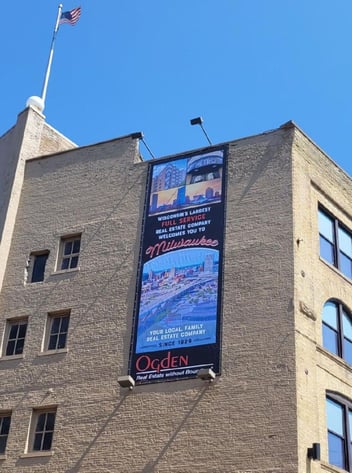
You should also consider where viewers will see the finished graphic. A banner mounted high on a large exterior wall serves a different purpose than one positioned closer to pedestrians. Therefore, choose frame dimensions that support the scale of the site and typical viewing distance.
Work With Existing Structures
If you’re mounting a frame to an existing structure, you need to account for the usable attachment area rather than simply measuring the overall structure. Nearby architectural features may reduce the space available for the frame. Careful measurements help you establish dimensions that fit the installation area properly. Those measurements also give installers clearer specifications before the frame reaches the site.
Use Large Walls Effectively

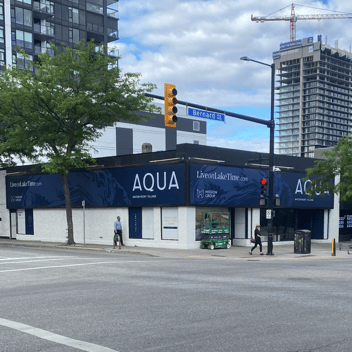
A large blank wall gives you substantial room for a graphic, but that doesn’t mean the display should automatically occupy every available inch. You’ll want the frame to fit the visual scale of the building while leaving appropriate space around the graphic. This approach keeps the display proportional to its surroundings.
Custom sizing becomes particularly useful when a wall has an unusual width or height. In those situations, custom banner frame dimensions help oversized signs use the available surface without forcing the graphic into a standard format that doesn’t suit the location. You can then plan the artwork around dimensions that suit the installation.
Consider Site-Specific Conditions
You should evaluate the installation area closely when planning an oversized frame because each site places different constraints on the finished display. Existing construction may affect where the system can mount, while the overall shape of the available area influences suitable dimensions.
A site review also gives you a clearer picture of the space installers will have to work with. Large graphics require enough room for proper handling during installation and future changeouts.
When evaluating a custom application, focus on these practical details:
- Measuring the usable mounting area carefully
- Noting physical features near frame edges
- Checking access around the display location
- Confirming the intended graphic dimensions
- Planning for future graphic changeouts
Fit Frames Around Architecture
You don’t always get a simple rectangular wall with unlimited mounting space. Architectural features may interrupt the available area or create a narrow section that calls for different proportions. Custom dimensions give you greater freedom to use these spaces without making the display look poorly matched to its setting.
You can also size a frame to complement a building rather than compete with its proportions. A long horizontal area, for instance, may work better with a similarly proportioned display than a standard format. Consequently, custom sizing can help the frame fit the building’s proportions more naturally.
Support Large Advertising Graphics
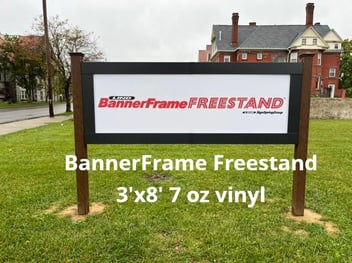
Oversized advertising gives you room to communicate at a scale that suits larger buildings or established sign structures. You still need a frame that corresponds with the graphic dimensions so the finished installation maintains consistent perimeter tension.
A banner tension frame system uses attachment points around the graphic perimeter to maintain tension across the installed banner. With SignSpring technology, springs create those attachment points and hold the graphic taut around the perimeter. The same spring-based attachment makes removal straightforward when you’re ready to replace the graphic.
Plan Around Graphic Dimensions
You’ll want to coordinate the graphic size with the frame specifications before production moves too far forward. Accurate dimensions help the finished banner correspond with the frame rather than requiring adjustments at the installation site. This coordination becomes increasingly important as graphics get larger because small measurement errors become harder to accommodate. Clear specifications give everyone involved the same dimensions to work from.
Adapt to Billboard Applications
Billboard applications also benefit from custom dimensions because existing structures can vary in size. In this application, SignSpring provides the spring-based system that attaches to the existing billboard structure and supports the poster around its perimeter. The system doesn’t include construction of the billboard structure itself.
Once the appropriate SignSpring components are in place, the poster attaches directly to the springs without requiring grommets. Perimeter tension then keeps the material taut across the billboard face. That arrangement simplifies graphic removal and replacement when advertising campaigns change.
Plan for Future Changeouts

A custom frame should support the first graphic while remaining practical for future replacements. If the display will host changing promotions, maintaining consistent graphic dimensions lets you continue using the installed system. You can then focus each changeout on the new graphic rather than treating every campaign as a new frame installation.
You should also consider access when planning the display. A large frame placed in a difficult location may require additional preparation each time the graphic changes. Planning for that access early makes future changeouts easier to manage.
Evaluate Practical Frame Details
Planning a large custom frame requires you to consider more than its overall width and height. You’ll need to think about the installation area and the way the graphic will interact with the frame once tensioned. Addressing those details early can make installation and future changeouts easier to manage.
Prioritize these steps as you develop the frame specifications:
- Confirm accurate finished frame dimensions
- Match the graphic to frame specifications
- Review the existing mounting location
- Consider access for graphic replacement
- Account for the intended display orientation
A custom frame becomes most useful when you treat it as part of an ongoing display strategy rather than a one-time installation. Once the frame is in place, future graphics can follow the same specifications, giving you a clearer path for seasonal updates, campaign changes, or new messaging.
Lind SignSpring offers spring-based frame solutions that support that kind of repeat use across large-format applications. If you’re planning your next oversized display, connect with us to discuss a frame setup that can keep working long after the first graphic comes down.